
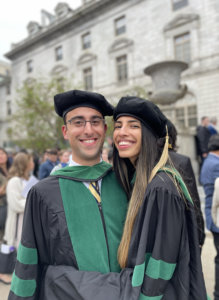
 My name is Laila, and I’m a resident physician in pediatrics. I’ve been living with debilitating temporomandibular joint disorder (TMD) for over four years — a journey that has completely reshaped my life and perspective both as a doctor and a patient.
My symptoms began during my first year of medical school, when I developed jaw pain and lost the ability to chew hard foods. Despite trying every therapy imaginable — mouth guards, Botox injections, physical therapy, acupuncture, and massage — nothing brought lasting relief. Over time, I became underweight and malnourished, and by my fourth year of medical school, I felt I had no choice but to undergo surgery. That operation, unfortunately, was unsuccessful. My jaw misaligned postoperatively, and since then, my pain and ability to eat have worsened beyond my preoperative state.
Starting residency while recovering from such a complication has been a tremendous challenge. I often feel like I’m mourning the loss of my old self – the spontaneous, social person who could eat, laugh, and speak freely. As my symptoms worsened, I had to take a two-month leave of absence to seek answers. For months, I lived on blended foods, embarrassed and exhausted, as my bite progressively worsened and my pain intensified.
Advocating for myself during this time has been challenging, even as a physician. I traveled across several states, consulting multiple specialists, surgical and non-surgical, and received a different explanation from nearly every provider. Some blamed the joint, others the muscles, or the teeth. I was offered everything from total joint replacement and orthognathic surgery to braces, arthroscopy, arthroplasty, and custom mouth guards that cost thousands of dollars. It felt less like medical care and more like being sold solutions.
I recognized the lack of solid evidence guiding TMD treatment, especially in complex post-surgical cases like mine. I ultimately decided to step back and focus on symptom management rather than chasing a cure. Through myofunctional therapy, I’ve relearned proper tongue posture and achieved some improvement. I still live on a soft diet, but I’m learning to adapt. When possible, I fit in physical therapy for posture and acupuncture for pain and muscle release. Though my bite remains misaligned, I’m cautious about pursuing further interventions without a clearer understanding.
Throughout this journey, I’ve encountered unnecessary obstacles beyond the pain itself, including feeling unheard and unsupported by the specialists I turned to for help. My complications were poorly documented, my concerns dismissed, and there was a striking discordance between the severity of my symptoms and my providers’ understanding of what I was going through.
Similarly, my insurance companies have not recognized TMD as a medical condition, so none of my care has been covered. These experiences were devastating, while also transformative. They have not only strengthened my commitment to being an empathetic, transparent, and patient-centered physician, but they have also fueled my desire to be an advocate. I also participate in the TMJ Patient-Led RoundTable and work with The TMJ Association, where patients, advocates, and professionals collaborate to elevate patient perspectives and improve awareness of the challenges faced by those living with TMD.
I now channel my energy into projects that bring meaning and connection. I created a soft food blog on Instagram called @TheSoftFork, where I share recipes and hope to raise awareness about living with TMD. I also hope to advocate for resident physicians coping with chronic health issues or pain, because managing both is an almost impossible task. I would also like to help advocate for research funding and insurance coverage for TMD.
My goal is to help others who feel like they’ve lost their quality of life. I know how isolating and defeating that can be, and I want to remind others that they are not alone — and that, together, we can be stronger.
I’ve had TmJ since being taken off mirtazapine Almost 4 years ago it’s been a nightmare the pain unbearable Docters don’t understand this so how can they help you nothing has helped me and it’s been really difficult to deal with