
Increasing Scientific Research and Awareness
The TMJ Association is fighting every day to change the entire landscape for people with TMJ disorders in many different ways including:
- Advocating for increased research funding to understand the causes and contributing factors of TMJ disorders
- Promoting the development of safe and effective treatments
- Championing an entirely new “whole person” treatment model for TMJ disorders.
Here are some of our recent efforts to advocate on your behalf:
Senate Report Language
Each year since 1993, TMJA’s advocacy efforts have resulted in congressional report language which sends a strong message to the National Institutes of Health (NIH), that elected officials are concerned about the research needs of TMJ patients and encourages the NIH to fund research on TMJ.
Report language should have a powerful influence on the decisions made by government agencies. The NIH is the primary US federal agency that conducts and supports medical research. In recent years, Congress has appropriated over $41 billion annually to the NIH, which is composed of 27 Institutes and Centers.
Scientists funded through grants from the NIH investigate ways to prevent disease, work to determine causes, and establish treatments – and even cures – for common and rare diseases.
Report language on TMJ disorders that was included in the Fiscal Year 2026 Senate Labor Health and Human Services report is below:
NATIONAL INSTITUTE OF DENTAL AND CRANIOFACIAL RESEARCH
Temporomandibular Disorders [TMD].—The Committee commends NIDCR for developing the TMD Collaborative for Improving Patient-Centered Translational Research [TMD IMPACT]. The timely implementation of the TMD IMPACT Collaborative into a national consortium is essential. The Committee is pleased NIDCR has funded nine TMD IMPACT groups. The Committee encourages NIDCR to maintain a patient-centered approach in the implementation of this Collaborative by including patients and advocacy organizations in this next phase of the project. The Committee is encouraged to see that NIDCR has added collaborators including the FDA, NIAMS, NIBIB, NINDS, NCCIH, OBSSR, and ORWH. NIDCR should encourage other Agencies and Institutes, Centers, and Offices within NIH with appropriate scientific expertise to participate in and support this project. Given the complexity of TMDs, interdisciplinary expertise is essential, particularly in addressing comorbidities and chronic pain conditions. The Committee directs NIH to provide an update within 120 days on the progress to implement the next phase of this important initiative including the recruitment of other NIH Institutes as partners. The Committee urges NIDCR to enhance the centralized resources of the two TMD national programs [TMD IMPACT] to advance interdisciplinary care, disseminate best practices, refine clinical guidelines, and integrate research into precision care for TMD patients. Finally, the Committee acknowledges NIDCR’s participation and support of the National Academies of Sciences, Engineering, and Medicine Report on TMDs and urges continued engagement to advance a scientific understanding and improve patient care.
OFFICE OF THE DIRECTOR
Temporomandibular Disorder [TMD].—The Committee notes the issuance of the TMD Collaborative for Improving Patient-Centered Translational Research [TMD IMPACT] by NIDCR and the first step in the implementation of a national consortium for TMD research. The Committee recognizes that TMD is a complex, multisystem condition and therefore encourages the NIH Director to work closely with the NIDCR Director to ensure that other Institutes, Centers, and Offices with the appropriate scientific expertise participate and support NIDCR as it implements and manages this project. NIH is encouraged to use the recommendations from the recent National Academies of Sciences, Engineering and Medicine report on TMDs, from the TMJ Patient-led RoundTable efforts, and from patients themselves as guidelines in the development of this consortium. The Committee also supports the creation and implementation of a Patient-Centered Coordinated Registry Network [CRN] for TMDs, recognizing its critical role in advancing research and collaboration across Federal agencies. The Committee is encouraged that TMD, a long neglected, misunderstood and underfunded condition is now receiving the attention and support needed to improve the understanding of TMD and develop evidence-based treatments and care for this complex condition. The Committee requests an update within 120 days of enactment on the development and implementation of this large-scale Collaborative to ensure the full participation of the many government and private entities necessary to successfully launch the Collaborative.
Food and Drug Administration
Temporomandibular Disorder [TMD].—The Committee encourages the FDA to support the development and implementation of a Patient-Centered Coordinated Registry Network (CRN) for Temporomandibular Joint Disorders (TMD). This Registry will be a critical component in the transformation of temporomandibular disorder research across other Government Agencies. The Committee supports collaborations among medical product centers related to the development of treatments for TMD and urges the FDA to support implementation of a Temporomandibular Joint (TMJ) CRN, continuing the development work of the TMJ Patient-led RoundTable and its partners in successfully developing the Registry as an important tool in ongoing efforts to improve the treatment and management of TMD patients.
TMJ Patient-Led RoundTable
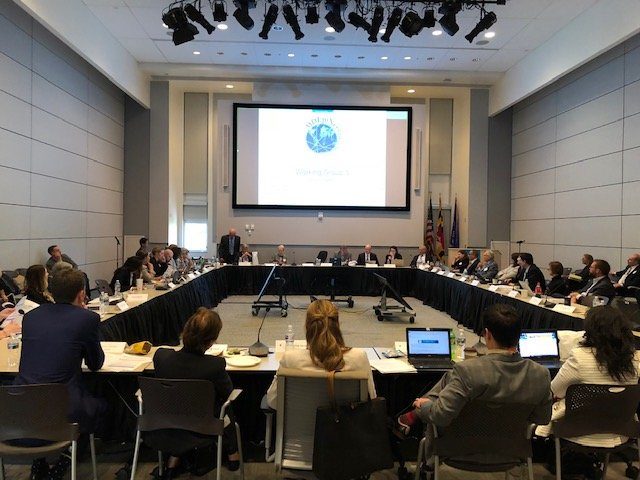
Acting as the catalyst to advance the needs of patients with TMJ implants, TMJA developed the TMJ Patient-led RoundTable (RT) – a patient-centered, public-private collaboration among the federal government, scientists, clinicians, dentists, advocates, manufacturers and others.
The RT was originally developed to understand why some TMJ patients improve with implant surgery, while others worsen. As an ongoing project, it has evolved into a comprehensive initiative to understand all aspects of TMJ disorders including risk factors, disease mechanisms, and clinical treatment practices – as well as how these interact to affect patient outcomes for all treatments. The overall goal is to establish a scientifically valid roadmap that can reliably predict treatment outcomes for individual patients.
The RT is the first patient-led project of the Medical Device Epidemiology Network (MDEpiNet), a public-private partnership developed to bring real world data and patient experiences together with a broad array of experts to conduct studies aimed at improving outcomes for TMJ implant patients worldwide.
The RT Working Groups have developed the following reports:
- White Paper – The TMJ Patient-Led RoundTable: A History and Summary of Work
- TMD Research Plan
- TMD and Nutrition Summary
- TMD Treatments: Review of Meta-Analyses & Systematic Review
- Update: Dental Education (Working Group 3)
- Summary TMJ Components and Repair
A unique aspect of the RT is that it is patient-centered. As such, we invite you – TMJ patients – to get involved.
National Academy of Medicine Study
As a result of TMJA’s tireless advocacy efforts, in 2019, the prestigious National Academy of Medicine (NAM) undertook its first study of temporomandibular disorders. The two-year effort resulted in a landmark report, published in March 2020, entitled Temporomandibular Disorders: From Research Discoveries to Clinical Treatment. It analyzed every aspect of TMJ – research, education and training, diagnosis and assessment, clinical management and treatment, comorbidities, treatment efficacy, models of care, insurance practices, clinical translation, and other issues. With implementation of the NAM study recommendations, our vision for the future of TMJ patient care can actually become a reality – a health treatment system that is informed by scientific evidence and addresses the complex physiology of individual patients with TMJ and other medical conditions.
National Academies of Sciences, Engineering and Medicine Forum on TMD
The TMJA was a sponsor and member of the National Academies of Sciences, Engineering and Medicine Forum on Temporomandibular Disorders (TMD). The forum which ran from 2023-2025, fostered multidisciplinary collaboration on TMD research and care. The goals were to understand TMD causes and treatments. Bridged medical-dental practice gaps. Improved access and address health inequities. Explored insurance and care costs. Raise awareness and reduce stigma.
Presentations and Letters
In addition to these efforts, the TMJA also advocates through other mechanisms, such as written testimony to elected officials and government agencies, organizational letters and presentations at Congressional, federal agency and/or medical-scientific meetings. Some of our recent efforts include:
- Letter to the Commission on Dental Accreditation (American Dental Association) regarding inclusion of information on Temporomandibular Disorders in dental education, May 31, 2020.
- Presentation by TMJA President, Terrie Cowley at the 10th Annual Medical Device Epidemiology Network meeting, October 23, 2019.
- Presentation by TMJA President, Terrie Cowley, at the National Academy of Medicine Meeting on TMD: From Research Discoveries to Clinical Treatment, January 29, 2019.
- Presentation by Terrie Cowley providing the Patients and Patient Groups Perspective at the Medical Devices Patient Engagement in Real World Evidence: Lessons Learned and Best Practices, September 12, 2018.
- Presentation by Terrie Cowley on the Overview of TMD and History of TMJ Replacement at the US Food and Drug Administration Grand Rounds, May 18, 2017.
- Webinar presentation by Terrie Cowley on Patient-led Translational Project at the MDEpiNet semi-annual meeting, May 16, 2017.