
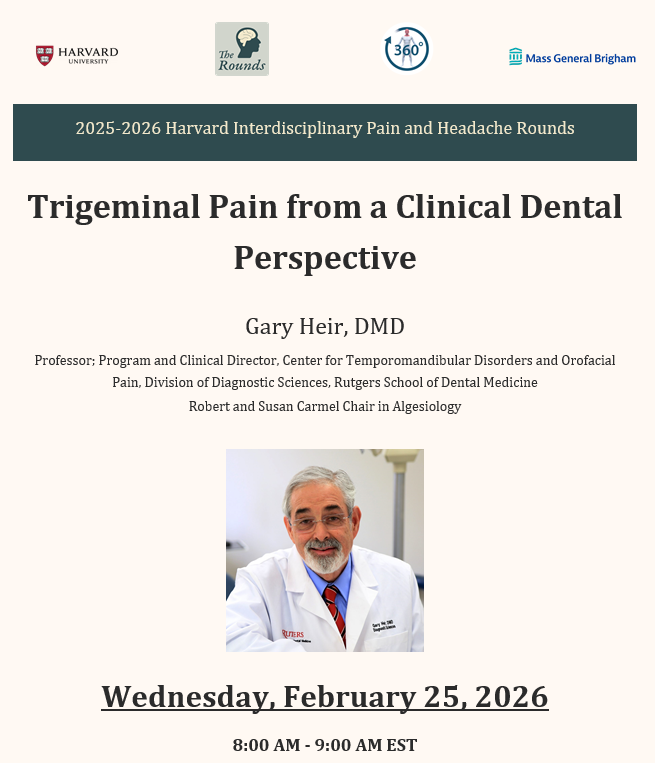
Trigeminal Pain from a Clinical Dental Perspective
Gary Heir, DMD
Dr. Heir is a Professor, Program and Clinical Director of the Center for Temporomandibular Disorders and Orofacial Pain at Rutgers School of Dental Medicine, where he also directs the postgraduate Advanced Education and Master’s programs. He holds the Carmel Chair in Algesiology, the first professorship in the United States dedicated to orofacial pain. He is a past president and Diplomate of the American Board of Orofacial Pain and a past president and Fellow of the American Academy of Orofacial Pain. He is also a Fellow of the American and International College of Dentists and the Pierre Fauchard Academy.
Dr. Heir serves as Chair of the Written Examination Council of the American Board of Orofacial Pain and has served on the Commission on Dental Accreditation (CODA) as both a Review Committee member and Commissioner; he continues to serve as a CODA Orofacial Pain site inspector. He is Section Editor of the Orofacial Pain Neuroscience section of The Journal of the American Dental Association and has published extensively on temporomandibular disorders and orofacial pain. He is the primary author of the nationally recognized postgraduate core curriculum in orofacial pain.
Learning Objectives:
1. Define the field of orofacial pain
2. Discusses trigeminal mediated orofacial pain disorders and mechanisms in a case-based manner
3. Discuss treatment strategies
Target Audience:
Physicians, dentists, psychologists, nurses, students, residents, and fellows with specialties in Oral surgery, Orofacial Pain, Pain Medicine, and Sleep Medicine
The 2025-2026 Rounds Series
The Rounds is an interdisciplinary educational series focused on providing evidence-based knowledge in pain and headache care. Originally developed for clinicians and researchers in Boston, the virtual program has grown to reach participants in more than 80 countries. Since our launching in 2021, we have welcomed not only healthcare professionals but also patients and families, recognizing the value of patient engagement in improving care, best practices, and outcomes. This year, we’re introducing “pain language summaries” and other content for our attendees.